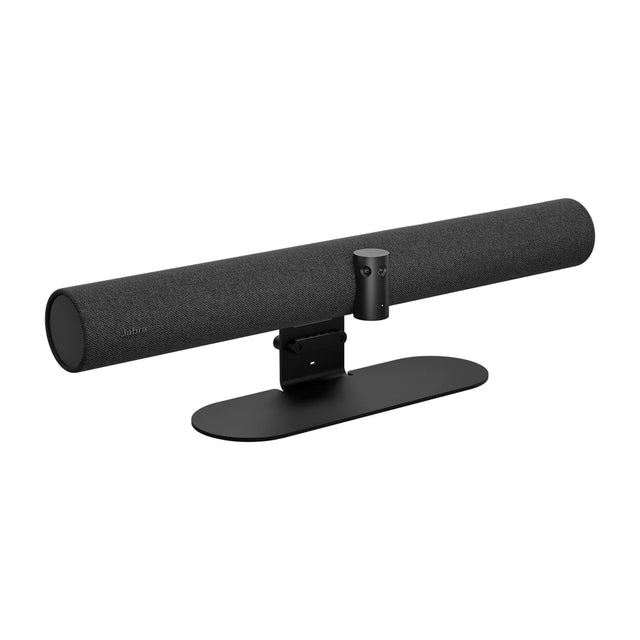
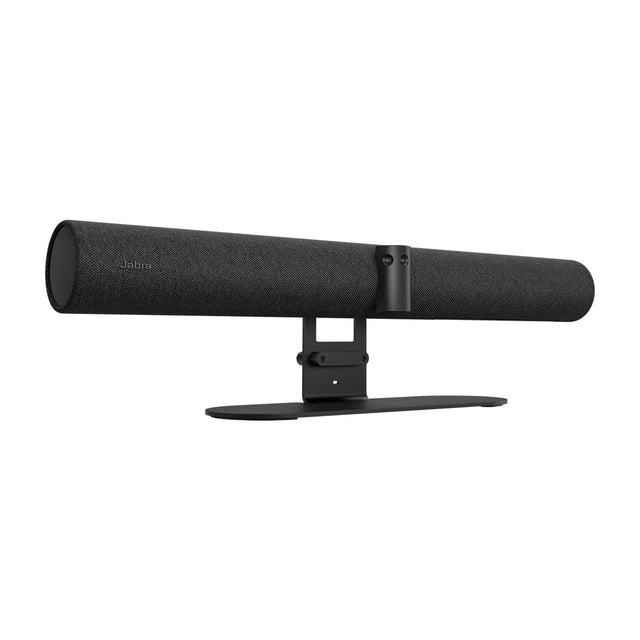
A BYOD (bring your own device) conference room has the camera, microphones, speakers and display installed, but no meeting computer. People connect their own laptop, usually with one USB cable and one HDMI or USB-C video cable, and run Teams, Zoom, Google Meet or Webex from it. The room equipment acts like a very good webcam and speakerphone.

What a BYOD room needs
| Component | Typical choice | Notes |
|---|---|---|
| Camera + audio | USB video bar | One device, one USB cable |
| Extra audio (optional) | Expansion mic or speakerphone | For deep tables |
| Display | Commercial display or TV, HDMI | Sized to the room |
| Connection | USB + HDMI at the table, or a single USB-C cable | Keep cables labeled and short |
| Wireless sharing (optional) | Wireless presentation system | For content only, not the camera |
Best USB video bars for BYOD rooms
| Room | Bar | Price |
|---|---|---|
| Huddle, small | Poly Studio V12 - 4K 120-degree USB bar | $1,453 |
| Huddle, small | Logitech MeetUp 2 - AI USB cam, 120-degree view | $1,079 |
| Huddle, small | Jabra PanaCast U30 - plug-and-play 4K bar | $818 |
| Small, medium | Jabra PanaCast 50 - 180-degree panoramic 4K | $1,117 |
| Small, medium | AVer VB342 Pro - 4K PTZ bar, 15x zoom | $1,753 |
| Medium, large | AVer VB350 - dual-lens 4K PTZ, 10 m mics | $2,949 |
Prices can change. More picks in best BYOD conference room cameras and best video bars.
The one-cable approach
Cable clutter is the biggest complaint in BYOD rooms. Options that help:
- USB-C with DisplayPort Alt Mode: the Logitech Active USB Cable (5 m) carries video and USB data on one cable for supported laptops.
- Single-cable extenders: Logitech Extend and Logitech Swytch connect a laptop to the room's display, camera and audio with one cable.
- Neat Bar: the Neat Bar BYOD model with a Neat USB-C cable.
Check that users' laptops support video over USB-C before standardizing on single-cable. Some business laptops do; some don't.
How to set up a BYOD conference room
- Mount the video bar above or below the display, centered. See camera placement.
- Run the bar's USB cable and an HDMI cable to the table. Use active USB cables for runs over 16 ft (5 m).
- Add a cable retractor or table box so cables stay in the room. See conference table power and connectivity.
- Post a short card: "Plug in USB + HDMI. In Teams/Zoom settings, choose [bar name] for camera, mic and speaker."
- Install the vendor's management tool (Logitech Sync, Poly Lens, Jabra Plus) on a room PC or use the vendor cloud to keep firmware up to date.
- Test with a Windows and a Mac laptop. See how to connect a laptop to a conference room TV.
Pros and cons of BYOD rooms
Pros
- Works with any meeting app, including external webinars.
- No room license and no room PC to patch.
- Lower cost, quick to deploy.
Cons
- Every meeting starts with plugging in and selecting devices.
- No join button, no calendar on a console.
- Experience depends on the user's laptop (USB ports, drivers, adapters).
- The laptop is busy running the meeting, so presenting from another device needs wireless sharing.
If your rooms are busy and mostly on one platform, compare a dedicated room: Teams Rooms vs BYOD. Many appliance bars also have a USB BYOD mode, so you can have both.
Setting up BYOD rooms across an office? Send us your room sizes and we'll suggest one standard kit per size.
Related guides
- USB Conference Cameras: How They Work and What to Buy
- How to Use a Video Bar With a Laptop (USB and BYOD Mode)
- What is a video bar? How all-in-one bars work
- Yealink RoomCast BYOD Conferencing with a USB Camera
- 360 conference cameras: are they worth it?
- Auto-Tracking Conference Cameras: How They Work
Outfitting several rooms, or reselling? Get a volume quote or apply for wholesale pricing →