A 360 conference camera sits in the middle of the table and sees everyone around it, then uses software to show a panoramic strip and close-ups of whoever is speaking. They're worth it for small to medium rooms with round or square tables, flexible spaces and rooms where people sit all the way around the table. They're a poor fit for long boardroom tables, rooms where everyone faces a screen, or as the only camera in a large room.

How a 360 camera works
- Multiple lenses or a fisheye lens capture a full circle around the device.
- Software stitches the image into a panorama and crops speaker views.
- Built-in microphones detect who is talking, so the camera knows whom to show.
- USB connection to a laptop or room PC makes it appear as a standard webcam, mic and speaker in Teams, Zoom or Meet.
Two product types use 360 cameras:
| Type | Example | How it's used |
|---|---|---|
| Standalone all-in-one | Meeting Owl, Kandao, EMEET | The only camera and audio in the room, USB to a laptop |
| Center-of-table companion | Neat Center, Logitech Sight | Adds a table-level view alongside a front-of-room video bar |
Pros
- Faces, not profiles. People at the sides of a table face each other, so a center camera sees their faces.
- Works with any table shape, including round tables and cluster layouts.
- Portable. Standalone units move between rooms easily.
- Combined camera and audio in one device keeps the table tidy.
Cons
- Table-height view. The camera looks up at people, and people at the far ends of long tables look small.
- Faces the wrong way in screen-focused rooms. When remote people show on a TV, everyone looks at the TV. A center camera then captures the side of their heads.
- Cable to the table. The device needs USB and power at the center, so plan a floor box or table grommet.
- Resolution spreads thin. A 360 image covers a lot of area, so each person gets fewer pixels than with a front camera.
- "Wireless" 360 cameras still need a laptop. Most use Wi-Fi only for setup or app control; video still travels over USB.
180° cameras: the middle ground
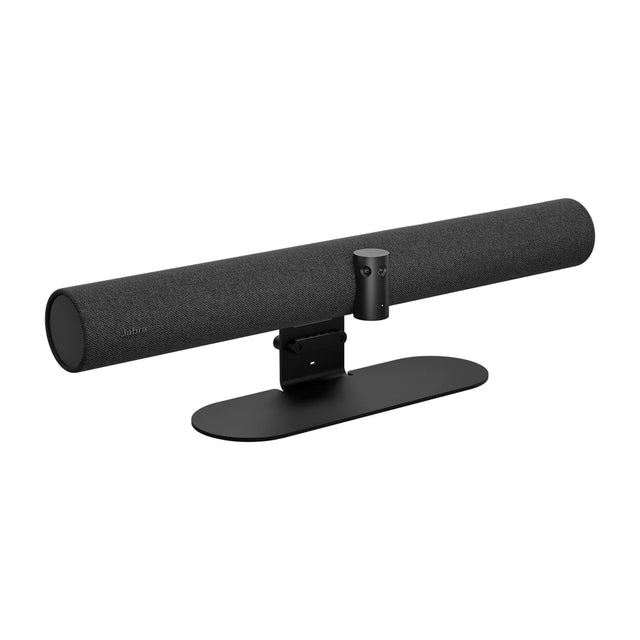
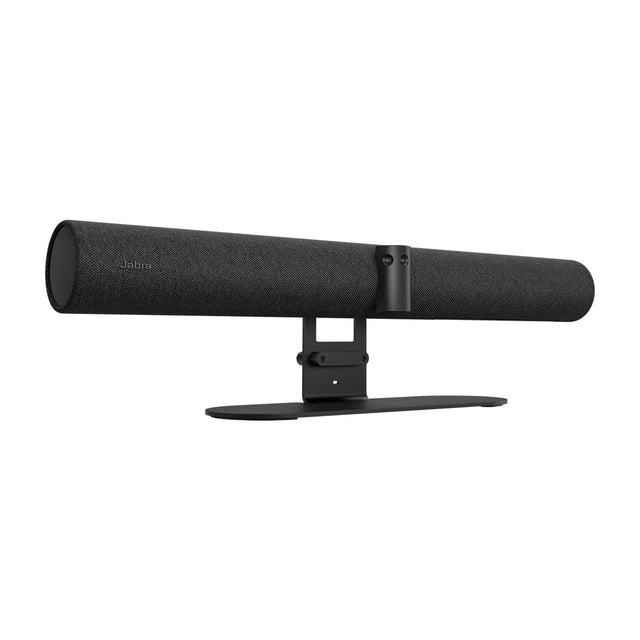
Many "panoramic" bars mount at the front with a 180° view, so people sitting right beside the screen are still in frame. The Jabra PanaCast 50 and Jabra PanaCast 40 VBS are examples. For most huddle and small rooms, a 180° bar at the display beats a 360 camera on the table, because people naturally face the screen. See wide-angle conference room cameras.
Which camera for which room
| Room | Best choice |
|---|---|
| Huddle room, people face the screen | 120°-180° video bar at the display |
| Round table, 4-8 people, BYOD | Standalone 360 camera |
| Medium room, long table, Teams or Zoom Room | Front bar + center companion (Neat Center or Logitech Sight) |
| Boardroom, 14+ seats | Front PTZ or dual-camera system; companion cameras optional |
| Classroom or training room | Front PTZ with presenter tracking |
For multi-camera rooms, Teams Rooms and Zoom Rooms can switch between the front camera and a companion automatically. See multi-camera conference room setup.
Bottom line
A 360 camera is worth it when seating wraps around the table and you need something portable or simple. In a managed room, a front-of-room bar plus a 360 companion gives the best of both. Compare options in best 360 conference cameras and Meeting Owl alternatives.
Unsure whether a 360 camera suits your table? Send us a photo or floor plan and we'll advise.
Related guides
- 360 Conference Cameras Compared: Kandao, EMEET, Nearity
- Best 360 conference cameras for meeting rooms
- Meeting Owl alternatives: 360 cameras compared
- USB Conference Cameras: How They Work and What to Buy
- Auto-Tracking Conference Cameras: How They Work
- BYOD Conference Rooms: How They Work and What to Buy
Outfitting several rooms, or reselling? Get a volume quote or apply for wholesale pricing →