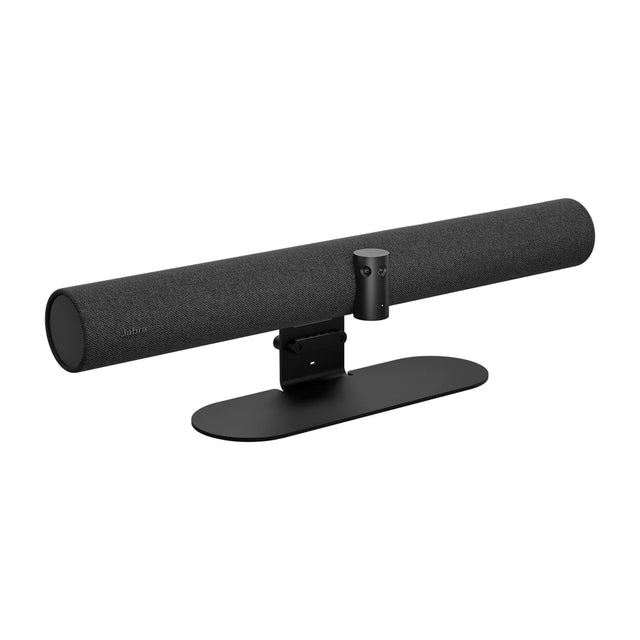
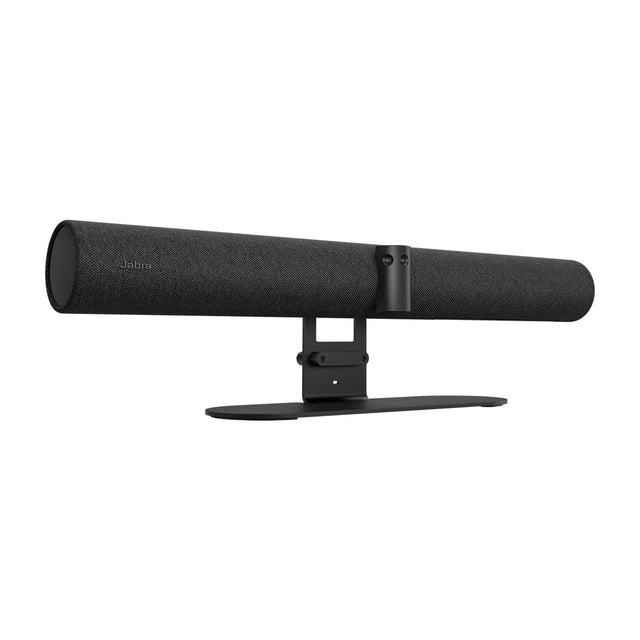
A USB conference camera connects to a laptop or room PC and shows up as a standard webcam (UVC), so it works in Microsoft Teams, Zoom, Google Meet, Webex or any other app without special drivers. Pick a wide-angle USB video bar for huddle and small rooms, and a USB PTZ camera or bar with zoom for medium and large rooms. The main catch is cable length: plan extenders for runs beyond a few meters.

Types of USB conference cameras
| Type | Best for | Examples we carry |
|---|---|---|
| USB video bar (camera + mics + speaker) | Huddle to medium rooms | Logitech MeetUp 2, Jabra PanaCast 50, Poly Studio V12, AVer VB342 Pro |
| USB PTZ camera | Medium to large rooms, add your own audio | AVer CAM520 Pro3, AVer CAM570, Poly Studio E60 |
| USB AI camera | Medium to large rooms with smart framing | Logitech Rally AI Camera, Logitech Rally AI Camera Pro |
| Camera + speakerphone kit | Medium to large rooms | Logitech GROUP, AVer VC520 Pro3, Logitech Rally Plus |
| Portable all-in-one | Small rooms and travel | Logitech ConferenceCam Connect |
How a USB-based room works
The camera and audio plug into a computer. That computer runs the meeting app and sends the picture to the room display by HDMI. The computer can be:
- A presenter's laptop (BYOD): one cable from the table to the laptop. Simple and works with any platform. See BYOD conference rooms.
- A dedicated room PC: runs Teams Rooms on Windows or Zoom Rooms with a touch controller. See conference room PC.
4K and HD
Most current room cameras capture in 4K. Meeting apps usually send 1080p or 720p, so 4K's benefit is mainly sharper digital zoom and cleaner auto-framing crops. HD (1080p) PTZ cameras with optical zoom, like the AVer CAM520 Pro3, still look excellent in large rooms. More in 4K conference cameras.
Built-in AI
"AI" on a USB camera usually means auto-framing, speaker tracking, multi-person tiles, or presenter tracking. Because the processing happens in the camera, it works in any app. Examples: Logitech RightSight, Jabra Intelligent Zoom, Poly DirectorAI, and AVer's tracking modes. See auto-tracking conference cameras.
Wide-angle USB cameras
Close seating in huddle rooms needs 120° or wider. The Jabra PanaCast 50 covers 180° horizontally; most other huddle bars are around 110-120° horizontal. See best wide-angle conference cameras.
USB-C vs USB-A
Many newer cameras use a USB-C port on the device and ship with a USB-C cable, sometimes with a USB-A adapter. The connector shape doesn't change compatibility; what matters is the USB speed (USB 3.x for 4K streams) and that the host port can carry it. Some single-cable solutions, like the Logitech Active USB Cable, also carry the laptop's video to the display over USB-C DisplayPort Alt Mode.
USB cable length limits and extenders
Standard passive USB cables are limited to a few meters (roughly 3-5 m for USB 3.x). For longer runs:
| Need | Solution |
|---|---|
| Longer than the included cable | Active or optical USB cable, e.g. Logitech Strong USB (10/25/45 m, plenum) |
| Up to 100 m over category cable | Extender kits, e.g. Logitech Extend for BYOD tables |
| Laptop at the table, PC at the display | Logitech Swytch to switch between room PC and laptop |
Avoid cheap passive extensions and unpowered hubs; they're the most common cause of cameras dropping out.
USB vs appliance
USB is flexible and affordable, but it relies on a computer. Appliance systems (Android-based bars) run the meeting app on the device and add remote management and one-touch join. Compare in conference camera HDMI vs USB and Teams Rooms vs BYOD.
Need help matching a USB camera to your room depth and cable run? Send us the layout.
Related guides
Outfitting several rooms, or reselling? Get a volume quote or apply for wholesale pricing →